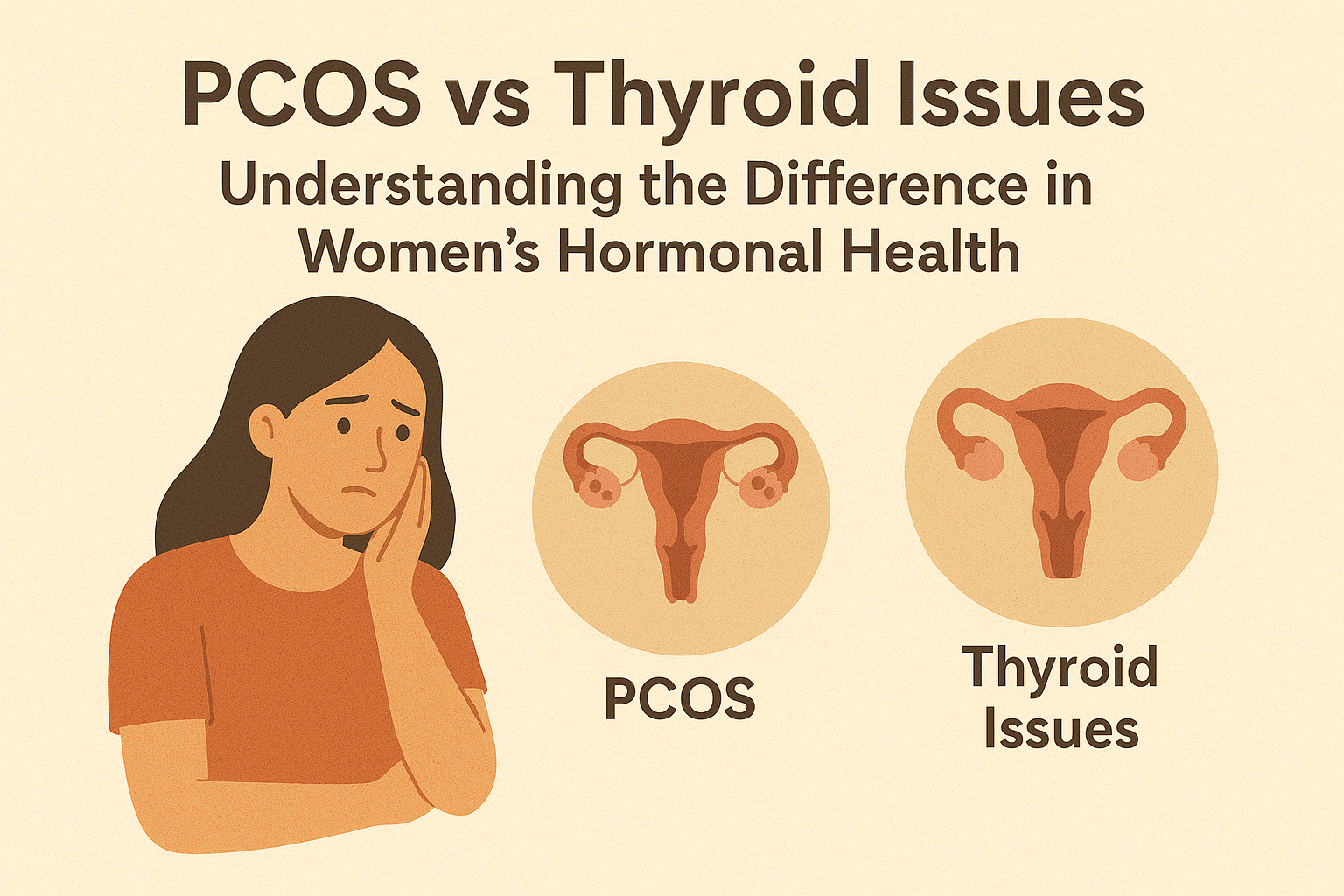
PCOS (Polycystic Ovary Syndrome) and thyroid disorders are among the most common hormonal conditions affecting women today. Their symptoms often overlap, making it difficult to distinguish between the two without medical evaluation.
- What Is PCOS?
PCOS is a hormonal condition where ovaries produce excess androgens (male hormones).
Common symptoms include:
- Irregular or missed periods
- Acne and excess facial hair
- Weight gain
- Ovarian cysts
- Fertility issues
PCOS is strongly linked with insulin resistance, making lifestyle management crucial.
- What Are Thyroid Disorders?
The thyroid gland controls metabolism, energy, and hormonal balance.
Two major types:
- Hypothyroidism: Underactive thyroid, slow metabolism
- Hyperthyroidism: Overactive thyroid, rapid metabolism
Symptoms: - Weight gain or loss
- Fatigue
- Hair fall
- Mood changes
- Temperature sensitivity
Thyroid disorders can also cause irregular periods.
- How Are PCOS and Thyroid Issues Similar?
Both conditions may cause:
- Irregular cycles
- Weight fluctuations
- Mood swings
- Hair issues
- Difficulty conceiving
Because of this overlap, blood tests become essential for proper diagnosis.
- Key Differences Between PCOS and Thyroid Disorders
Feature PCOS Thyroid Disorder
Hormones High androgens Imbalance of T3/T4/TSH
Fertility Often affected May be affected
Periods Irregular/absent Heavy/light
Weight Mostly gain Gain (hypo) or loss (hyper)
Visible signs Acne, facial hair Dry skin, hair fall
- Diagnosis and Treatment
Doctors perform:
- Blood tests (TSH, T3/T4, androgens)
- Ultrasound for PCOS
- Insulin and vitamin levels
Treatments include medication, lifestyle changes, hormone correction, and managing underlying causes.